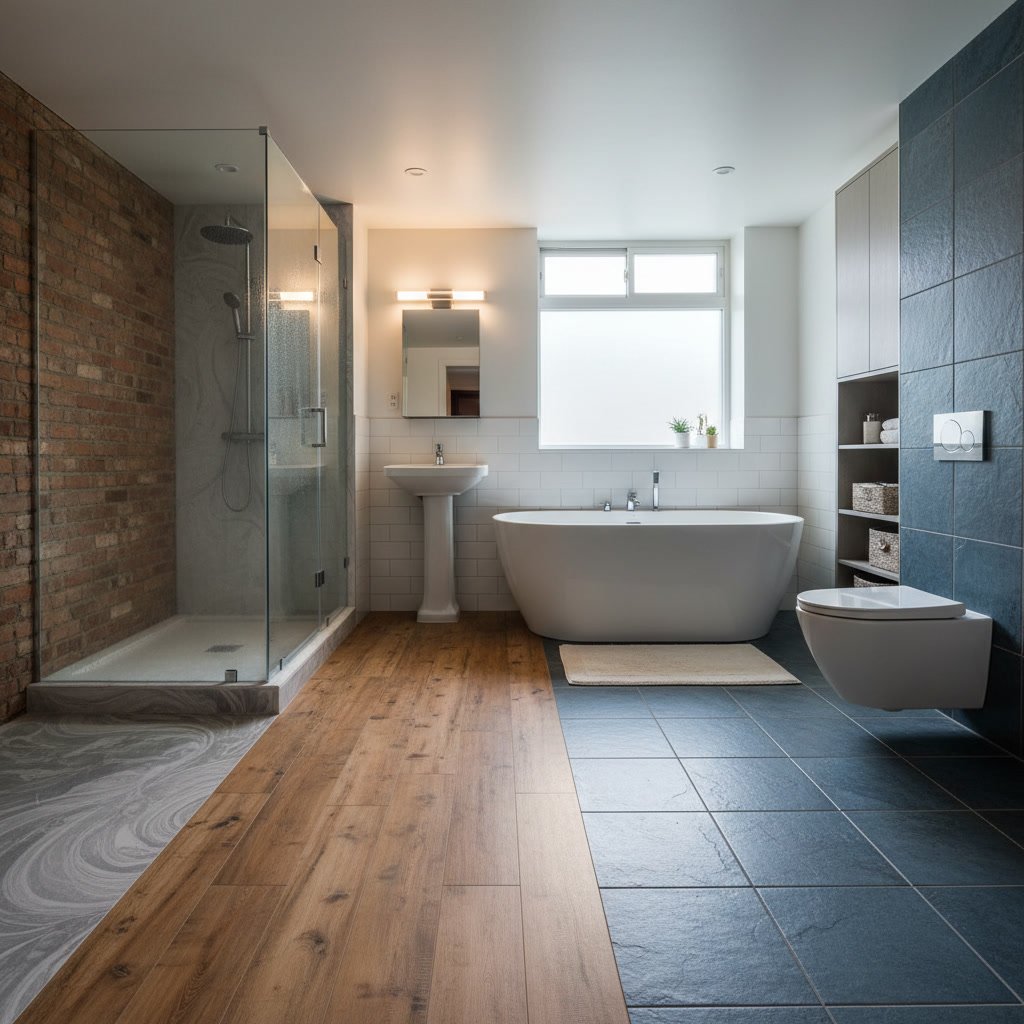
Your basement has the potential to become valuable living space, but choosing the wrong flooring can lead to mold, warping, and costly repairs. Michigan’s freeze-thaw cycles, high humidity, and occasional water intrusion make basement flooring types one of the most critical decisions in any below-grade renovation. The right choice protects your investment while creating a comfortable, functional space your family will actually use.
This guide covers the most popular basement flooring types for Oakland County homes, explains how each performs in below-grade conditions, and helps you match the right material to your specific needs and budget.
Why Basement Flooring Requires Special Consideration
Basements face challenges that upper floors never encounter. Ground contact means concrete slabs stay cooler and more prone to condensation. Even in homes with good drainage, relative humidity in basements runs 10 to 20 percent higher than upper levels.
Water vapor travels through concrete via capillary action, depositing moisture on the underside of traditional flooring materials. This process happens even without visible leaks or flooding. Over time, trapped moisture destroys adhesives, warps wood, and creates ideal conditions for mold growth.
Temperature fluctuations also affect basement floors differently. Winter cold radiates through foundation walls and slab concrete, while summer humidity condenses on cool surfaces. Materials that perform well upstairs may fail within months when installed in a basement without proper preparation.
Luxury Vinyl Plank and Tile
Luxury vinyl plank (LVP) and luxury vinyl tile (LVT) have become the most popular basement flooring types in Oakland County for good reasons. These materials are completely waterproof, not just water-resistant, making them ideal for below-grade applications.
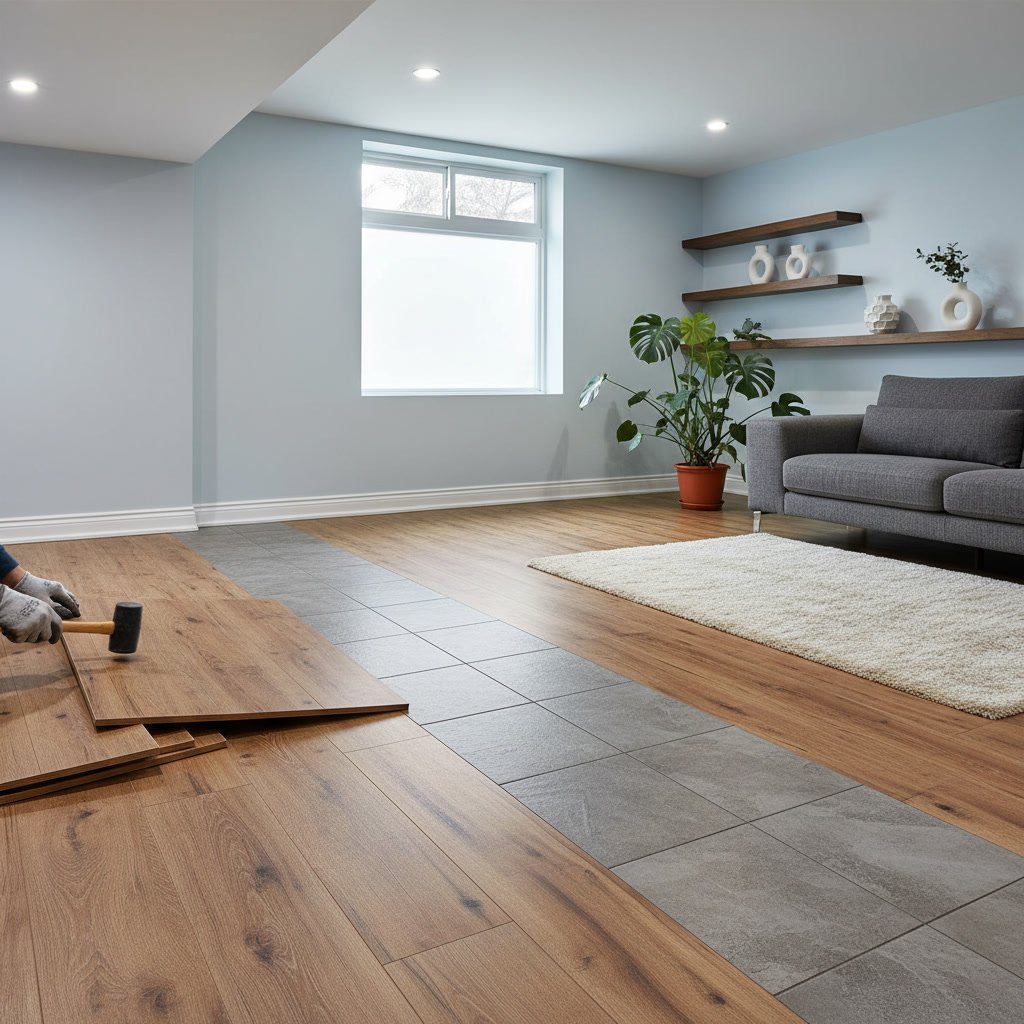
Modern LVP mimics hardwood so convincingly that most people cannot tell the difference from across a room. LVT replicates stone, ceramic, and other materials with similar realism. Thickness ranges from 2mm to 8mm, with thicker planks feeling more substantial underfoot and hiding minor subfloor imperfections.
Installation methods include floating floors with click-lock edges, glue-down systems, and loose-lay products that rely on weight and friction. Floating floors work well over concrete with proper underlayment, while glue-down installations require moisture testing and sometimes a vapor barrier.
Cost runs from $2 to $7 per square foot for materials, depending on thickness, wear layer, and brand. Professional installation adds $1 to $3 per square foot. Most manufacturers rate their products for 10 to 25 years of residential use, with wear layers of 12 mil or thicker providing the best longevity.
Pro Tip: Always check the manufacturer’s warranty requirements for basement installations. Some brands require specific moisture barrier systems or void warranties if relative humidity exceeds certain thresholds.
Ceramic and Porcelain Tile
Tile remains one of the most durable basement flooring types, with properly installed ceramic or porcelain lasting 50 years or more. The material is completely impervious to moisture, unaffected by temperature swings, and highly resistant to wear.
Porcelain tile is denser and less porous than ceramic, making it the better choice for basements. It handles freeze-thaw cycles better and absorbs virtually no water. Large-format tiles (12×24 inches or larger) create fewer grout lines and a more contemporary look, while smaller tiles offer better slip resistance.
The main drawback is hardness and cold feel. Tile provides no cushion, making it tiring to stand on for extended periods. It also conducts heat away from feet, feeling cold unless you install radiant heating beneath it.
Material costs range from $1 to $15 per square foot, with most homeowners spending $3 to $8 for good-quality porcelain. Professional installation runs $5 to $10 per square foot, including thinset, grout, and sealer. The total investment is higher than most other options, but the lifespan justifies the cost in high-traffic areas.
Tile Installation Considerations
Proper tile installation in basements requires a crack isolation membrane over the concrete slab. This flexible layer prevents cracks in the concrete from telegraphing through grout lines and breaking tiles. It also provides a secondary moisture barrier.
Grout selection matters more in basements than other areas. Epoxy grout resists moisture and staining far better than traditional cement-based grout, though it costs more and requires skilled application. Sealing cement grout every 12 to 18 months is essential to prevent moisture absorption.
Engineered Hardwood
Engineered hardwood consists of a thin layer of real wood veneer bonded to multiple layers of plywood or high-density fiberboard. This construction makes it more dimensionally stable than solid hardwood, though still not ideal for basement applications.
Unlike solid hardwood, which should never be installed in basements, engineered wood can work in below-grade spaces if specific conditions are met. The concrete must pass a calcium chloride moisture test showing less than 3 pounds of moisture emission per 1,000 square feet over 24 hours. Relative humidity must stay below 60 percent year-round.
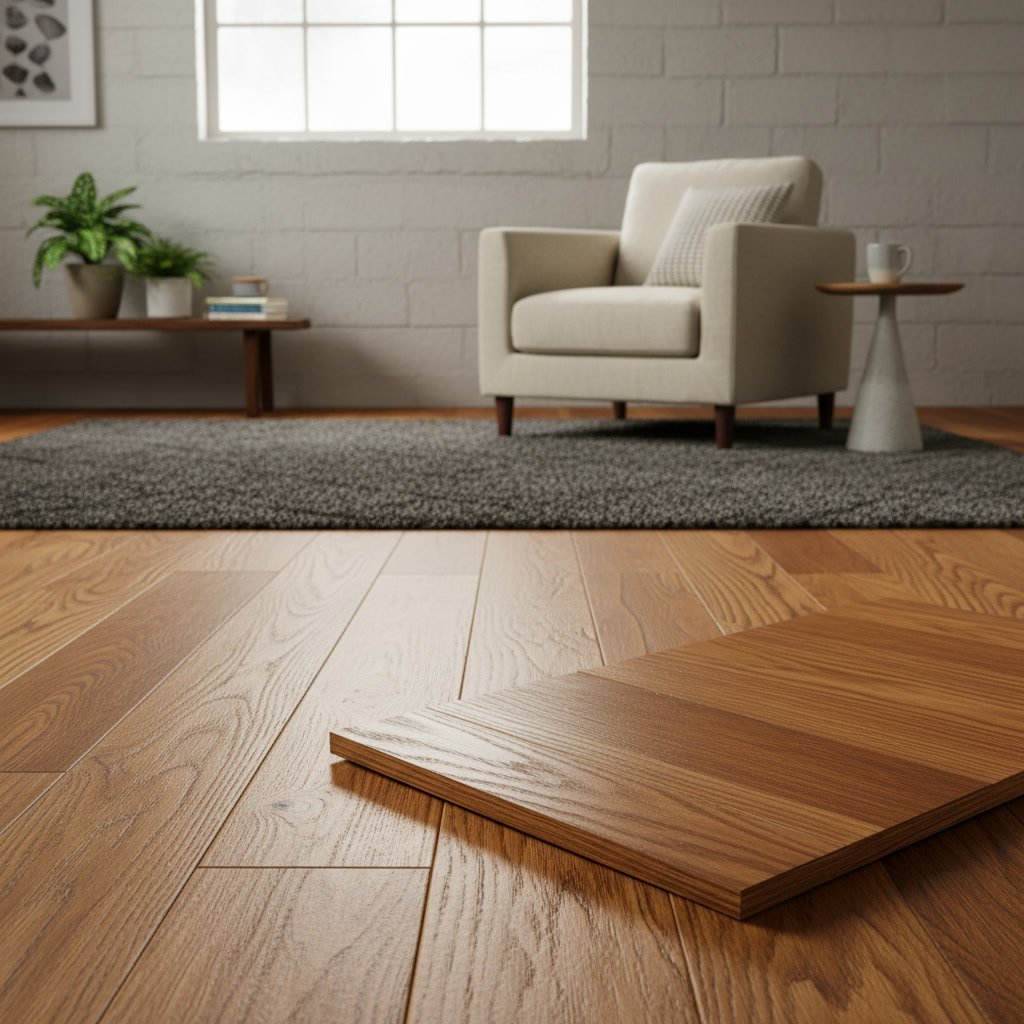
Even when conditions allow engineered wood, expect some seasonal movement. Gaps between boards may widen in winter and close in summer as humidity fluctuates. The wood surface is also vulnerable to damage if water intrusion occurs, making it a poor choice for basements with any history of moisture problems.
Cost runs $3 to $12 per square foot for materials, with installation adding another $3 to $8 per square foot depending on whether you choose floating or glue-down installation. Most engineered hardwood carries a 25 to 30-year residential warranty, but basement installations often receive reduced coverage.
Carpet and Carpet Tiles
Wall-to-wall carpeting creates a warm, comfortable basement floor, but traditional installation over padding poses significant risks. If water enters the basement, carpeting and pad absorb it like a sponge, creating mold within 24 to 48 hours.
Carpet tiles offer a smarter approach among carpet-based basement flooring types. These 18-inch or 24-inch squares install directly over concrete without padding, using either peel-and-stick backing or interlocking edges. If water intrusion occurs, you can pull up affected tiles, dry the concrete, and replace only the damaged sections.
Modern carpet tiles come in various styles, from commercial-grade loop pile to plush residential textures. They provide sound absorption, warmth, and comfort without the all-or-nothing risk of broadloom carpeting. Most products include built-in moisture barriers on the backing.
Material costs range from $1 to $5 per square foot, and installation is straightforward enough for confident DIYers. The main limitation is aesthetic, as carpet tiles have visible seams and a more commercial appearance than traditional carpeting.
Pro Tip: Buy 10 to 15 percent extra carpet tiles and store them in your home. This ensures you have matching replacements if tiles are damaged or stained, since dye lots vary and discontinued styles become impossible to match.
Concrete Staining and Epoxy Coating
Leaving concrete exposed and treating it as the finished floor eliminates moisture concerns entirely. Acid stains, water-based stains, and epoxy coatings transform bare concrete into attractive, durable surfaces.
Acid stains react with minerals in concrete to create variegated, organic color patterns. Each slab produces unique results. Water-based stains offer more color options and predictable results but less depth. Both types penetrate the surface rather than forming a film on top, so they will not peel or chip.
Epoxy coatings create a thick, plastic-like layer over concrete. They come in solid colors, metallic finishes, and decorative flake systems. Properly applied epoxy is extremely durable and chemical-resistant, though it requires careful surface preparation and can be slippery when wet.
Cost varies widely based on the system chosen. DIY acid staining runs $0.50 to $2 per square foot for materials. Professional epoxy coating installations range from $3 to $12 per square foot depending on the number of coats, decorative elements, and surface preparation required.
Surface Preparation Requirements
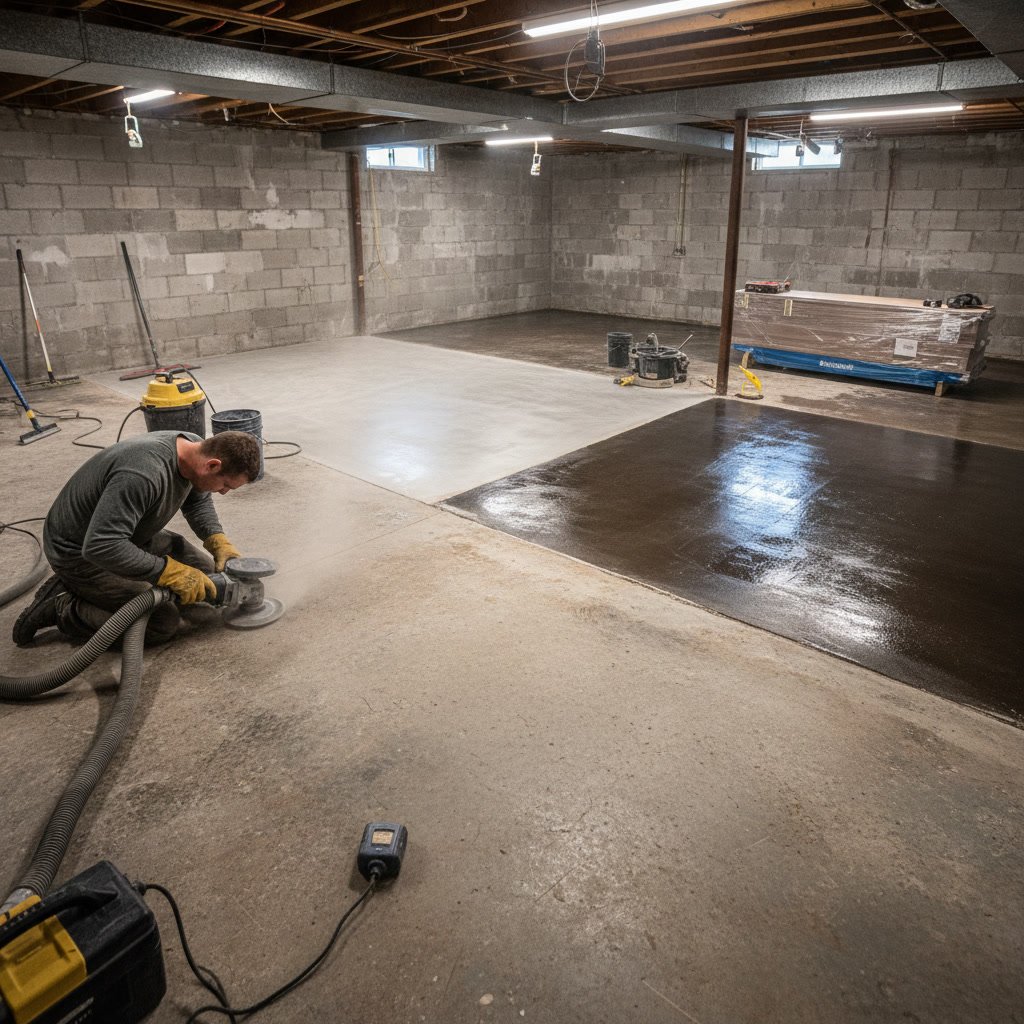
Both staining and epoxy require clean, porous concrete free from sealers, paint, or contaminants. Most slabs need diamond grinding or acid etching to open the surface and ensure proper adhesion. Any cracks should be filled with flexible epoxy crack filler before coating.
New concrete must cure for at least 28 days before staining or coating. Moisture testing is still important, as excessive vapor transmission can cause epoxy to delaminate even though the coating itself is waterproof.
Rubber Flooring and Foam Tiles
Interlocking rubber tiles and foam mats create comfortable, waterproof surfaces ideal for exercise areas, playrooms, and workshops. These basement flooring types install without adhesive, floating over the concrete and allowing air circulation underneath.
Rubber tiles range from 1/4 inch to 3/4 inch thick, with thicker options providing more cushion and sound absorption. They resist moisture, oils, and most chemicals. Foam tiles are lighter and less expensive but less durable, better suited for temporary use or low-traffic areas.
The modular nature makes installation and removal simple. You can reconfigure layouts or take the flooring with you if you move. Rubber tiles cost $2 to $8 per square foot, while foam tiles run $0.50 to $3 per square foot.
The utilitarian appearance limits these materials to specific applications. They work well in dedicated activity spaces but look out of place in living rooms or bedrooms.
How to Choose the Right Flooring for Your Basement
Start by assessing your basement’s moisture situation. Conduct a simple plastic sheet test by taping 2-foot squares of plastic sheeting to the concrete in several locations. Leave them for 72 hours, then check for condensation on the underside. Any moisture indicates vapor transmission that will damage moisture-sensitive materials.
Consider how you will use the space. Home theaters and bedrooms benefit from carpet tiles or LVP for comfort and sound absorption. Bathrooms, bars, and utility areas need completely waterproof options like tile or vinyl. Exercise rooms work best with rubber flooring.
Budget matters, but factor in lifespan and maintenance costs. Tile costs more upfront but lasts decades with minimal maintenance. Carpet tiles are less expensive initially but may need replacement every 10 to 15 years. LVP offers a middle ground with moderate cost and good longevity.
Climate control in your basement affects flooring performance. Dehumidifiers that maintain relative humidity between 30 and 50 percent extend the life of all basement flooring types and prevent musty odors. Proper HVAC design makes moisture-sensitive materials like engineered wood more viable.
Subfloor Systems
Some homeowners install raised subfloor systems before flooring. These plastic or wood frame systems create an air gap between concrete and finished floor, allowing moisture to escape and providing thermal insulation. They also create a flatter surface and warmer feel underfoot.
Subfloor systems add $2 to $6 per square foot to project costs and reduce ceiling height by 1/2 inch to 2 inches. They are most beneficial in basements with minor moisture issues or cold concrete that causes comfort problems.
Working with Complete Home Improvement Services LLC
Selecting and installing the right basement flooring types requires experience with below-grade conditions specific to Oakland County. Complete Home Improvement Services LLC has extensive experience with basement finishing projects throughout Waterford, Clarkston, Pontiac, Auburn Hills, Lake Orion, White Lake, Bloomfield Hills, Rochester Hills, Commerce Township, and West Bloomfield.
Professional installation includes moisture testing, proper surface preparation, and warranty-compliant installation techniques that protect your investment. Whether you are finishing a new basement or upgrading existing flooring, experienced contractors ensure materials perform as expected in Michigan’s challenging climate.
For guidance on choosing basement flooring types that match your needs and budget, contact Complete Home Improvement Services LLC at +12486186666. Their team can assess your space, explain your options, and deliver professional installation that stands the test of time.
Frequently Asked Questions
Can you install laminate flooring in a basement?
Traditional laminate flooring is not recommended for basements because the fiberboard core absorbs moisture and swells when exposed to humidity or water. Some manufacturers produce water-resistant laminate with plastic cores, but these still do not match the moisture performance of luxury vinyl plank. If you like the look of laminate, choose LVP instead for better durability in below-grade applications.
Do I need a vapor barrier under basement flooring?
This depends on the flooring type and your concrete’s moisture level. Waterproof materials like tile and luxury vinyl do not require vapor barriers, though some manufacturers recommend them for warranty purposes. Moisture-sensitive materials like engineered wood or carpet always need proper moisture mitigation. Conduct a calcium chloride test to measure vapor emission and consult manufacturer specifications for your chosen product.
What is the warmest flooring option for a cold basement?
Carpet and carpet tiles feel warmest underfoot because the fibers trap air and provide insulation. Cork and luxury vinyl with thick underlayment also feel warmer than hard surfaces like tile or concrete. For the warmest solution, consider installing radiant floor heating under tile or vinyl. This system warms the entire floor surface and makes even cold-conducting materials comfortable in winter.
How do I know if my basement has too much moisture for flooring?
Visible signs include water stains on walls, efflorescence (white powder on concrete), musty odors, or condensation on pipes and walls. Conduct a plastic sheet test or hire a professional for calcium chloride testing. If vapor emission exceeds 3 pounds per 1,000 square feet over 24 hours, you need moisture mitigation before installing most flooring types. Address drainage issues, apply concrete sealers, or install subfloor systems to manage moisture.
Can I install basement flooring myself or should I hire a professional?
Floating floor systems like click-lock LVP and carpet tiles are DIY-friendly for homeowners with basic tools and patience. Tile installation requires more skill, specialized tools, and experience to achieve professional results. Moisture testing, concrete preparation, and understanding manufacturer warranty requirements are complex enough that most homeowners benefit from professional guidance even if they handle the actual installation themselves.